
Arc welding robotic arms
TLDR
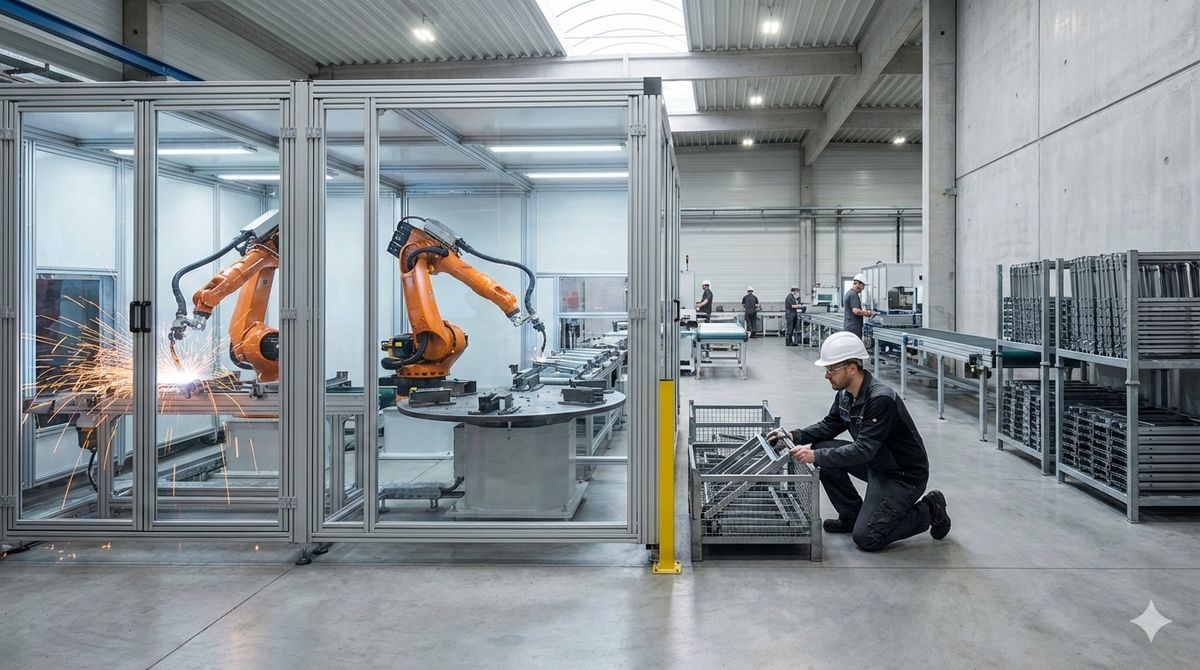
A robotic arm for arc welding pays itself with 1.5 to 2.5 years in most cases and solves the problem of welder shortage. The value applies to SMEs as well with physical. This is enabled with recent advancements in physical AI that makes deployment time shorter and allow for more flexibility. For larger companies this helps also to increase the time to the first successful robot welded component.
Why start with welding?
There are several types of welding, arc welding is the most flexible and common way, a good place to start. If your products require some sort of welding and its quality matters highly then investing on automating it pays itself quickly, the financials are without question.
If you are here for curiosity and don’t know much about arc welding let me give a brief overview. The main challenges of arc welding are the ever growing scarcity of skilled workers. More welders retire than trainee join the workforce. In the UK alone there could be a 35k shortage, source. Additionally, the variability in quality throughout a working day are depending on expert level and human level of energy.
Physical AI advancements enable flexibility
A robotic arms needs to be programmed to perform an action. Many softwares allow you to define this and are provider specific. Even though less flexible than a human, once you invested in the robotic arm you can repurpose it as your needs changes by setting up new workflows in the software.
The time to successfully deploy it into action is reducing more an more. With the rapid advancements in physical AI deployment and repurposing downtime gets dramatically reduced. The latest advancements in real-time adjustments and automated programming make this deployment and workflow setting more intuitive and faster.
This allows you to maximise the return on the investment and close the gap in flexibility between human and machine.
Which robots
A strong company to consider is KUKA. They have been building robotic arms since the 80s and are now part of a bigger group that can sustain the R&D investments. So you can invest in their tech with peace of mind and low risk.
Then there are two categories. Either a rather specialised and fast robotic cell. Or, a more flexible cobot - short for collaborative robot - to work closely with humans.
Once you’ve chosen KUKA and want to further automate other repetitive or dangerous tasks, KUKA will very likely have a solution for you. They have a strong ecosystem that once you are in you can reliably extend and fin da solution to automate progressively. KUKA is known to deploy robots in precision critical environments like aerospace.
For high mix environments, other providers like Yaskawa provide more cobot focused environments and may be more adapted to the need of an SME. KUKA has historically been lees focused on cobots, but is now catching up.
The financials of a robot welding arm.
The cost can vary depending on the provider. However, most reports on implementation agree of a return on investment within 1.5 to 2.5 years. You should budget for 2 years, and can overshoot your target if this investment enables you to generate new revenue streams.
As a rough estimate a typical robot can do the work of 2 welders and has consistent quality throughout the day. In most applications a working employee needs to set the parts securely before the robotic arms can start welding. However, this employee doesn’t need to be a welder, with some in house training on quality and clearly defined processes you have a much wider choice of personnel.
Lets compare the price of 2 similar cobot arms between 2 providers. A KUKA cobot arm with a 10kg payload 6 axis is between USD 50k and USD 70k source. A Yaskawa cobot with same characteristics is between USD 25k and USD 35k. The price difference is significant, lets understand the different actors better and what differences you get.
KUKA should be your choice if you need advanced features, which the justify the price bump. For example high precision, predictive maintenance and the ability to set the robot arm onto a more repetitive and fast set of tasks. This ensures you can expand your margins when speed and uptime are critical.
Yaskawa remains a a Tier 1 global leader, their lower price is justified by a practical and more efficient approach to producing and deploying robots. They provide enough value to most SMEs. Larger companies with very high volumes, may need the extra precision and software complexities from KUKA.